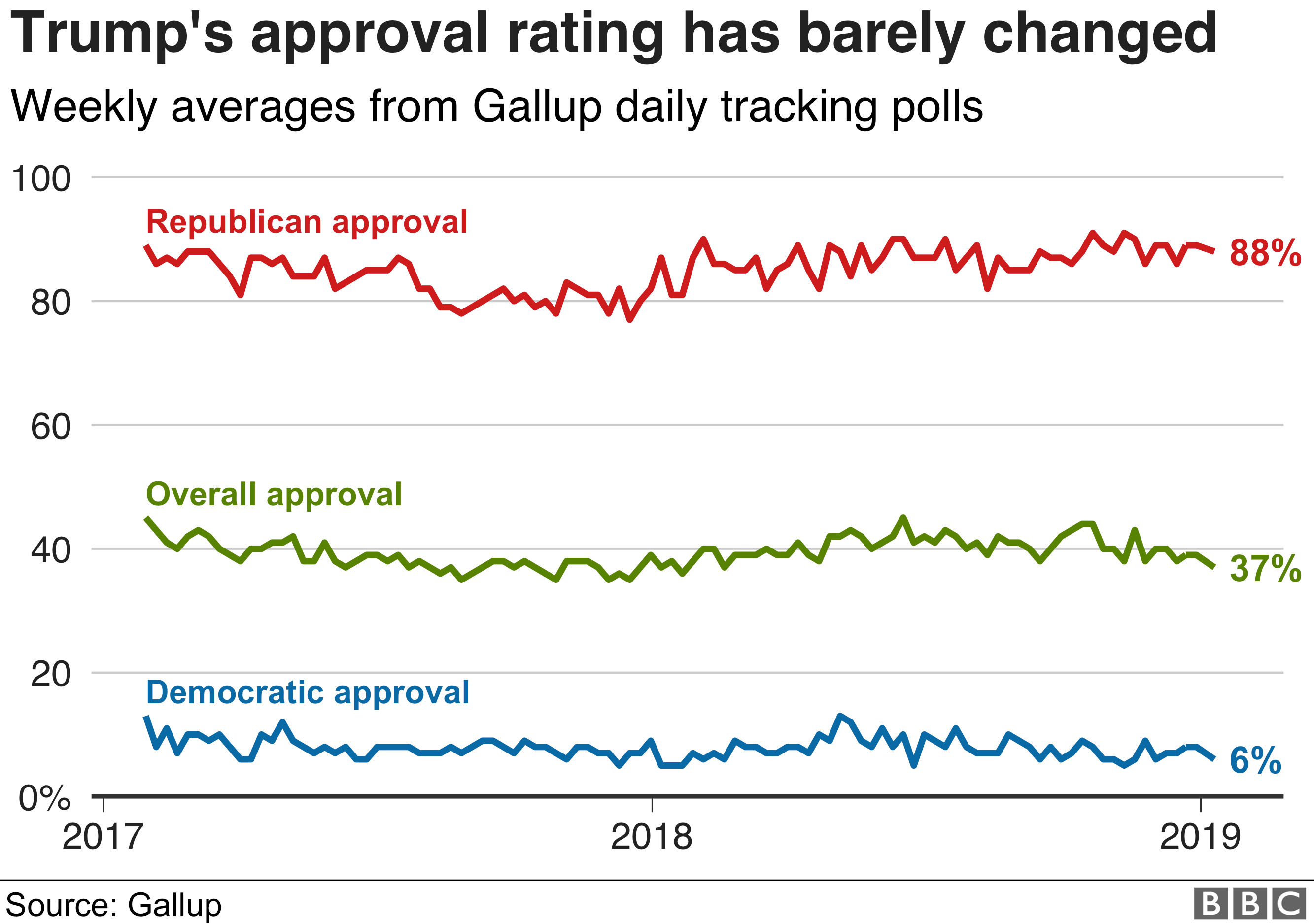
In the immediate aftermath of the 2024 White House Correspondents' Dinner (WHCD), a wave of speculation, outrage, and conspiracy theories surged across social media—none more incendiary than actress Mia Farrow’s suggestion that Donald Trump may have staged the shooting incident to boost his approval ratings.
Farrow, a longtime political activist and vocal critic of Trump, tweeted: “Convenient shooting? Trump’s approval spikes after WHCD attack. Smells of false flag to me.” The comment, since deleted but widely screenshotted and shared, ignited fierce debate about the boundaries of political satire, disinformation, and legitimate inquiry in an era of deep polarization.
Whether meant as provocation, satire, or genuine suspicion, Farrow’s remark reflects a broader erosion of public trust—and raises urgent questions about how quickly accusations of political theater can gain traction, especially when they involve a figure as polarizing as Trump.
Here’s a detailed examination of the claim, its context, and why such allegations spread so rapidly in today’s media ecosystem.
The Incident at the WHCD: What Actually Happened
On the evening of the 2024 White House Correspondents' Dinner, a lone gunman approached the security perimeter outside the Washington Hilton, where the event was held. The individual, later identified as 34-year-old Robert Daley, fired several rounds before being neutralized by Secret Service and DC police. No attendees were injured, though a police officer sustained non-life-threatening injuries.
Daley had a history of mental health issues and had posted anti-government content online. Authorities confirmed he had no known ties to extremist organizations or political campaigns. The FBI classified the event as an isolated act of domestic violence, not terrorism.
Despite the official narrative, the timing was politically sensitive: Trump had been campaigning aggressively, and national polls showed his support slipping in key swing states. Within hours of the shooting, his rally attendance surged, and multiple polling firms recorded a temporary bump in favorable ratings—what political analysts call the “rally-around-the-flag” effect.
It was this spike in popularity that Farrow seized on in her now-deleted tweet.
Mia Farrow’s History of Political Provocation
Mia Farrow isn’t just any celebrity commentator. For decades, she has used her platform to advocate for human rights, speak out against authoritarianism, and challenge political power. From her work in Darfur to her criticism of China’s policies, Farrow has built a reputation as a serious, if controversial, voice in global activism.
However, her approach often leans into bold, unsubstantiated claims. In 2020, she suggested the U.S. government may have engineered aspects of the pandemic. In 2022, she amplified conspiracy theories about election fraud—though not specifically related to Trump.
Her WHCD shooting comment fits a pattern: using a high-profile incident to provoke scrutiny of power. But this time, the suggestion crossed a line for many observers.
“The difference between asking questions and spreading disinformation is evidence,” said media ethicist Dr. Lena Cho in a CNN interview. “Farrow didn’t offer proof. She offered insinuation. And in today’s climate, that’s enough to fuel a fire.”
Why the Staged Shooting Theory Gained Traction
Farrow’s claim didn’t go viral because it was credible—it went viral because it was emotionally resonant.
Consider the ingredients:
- A near-miss attack on a major political event
- A former president with a history of drama and victim narratives
- A measurable bump in approval ratings
- A celebrity with moral authority suggesting manipulation
Psychologically, humans are wired to detect patterns, especially in chaos. When a potentially threatening event is followed by political gain, the brain jumps to causation—even without evidence.
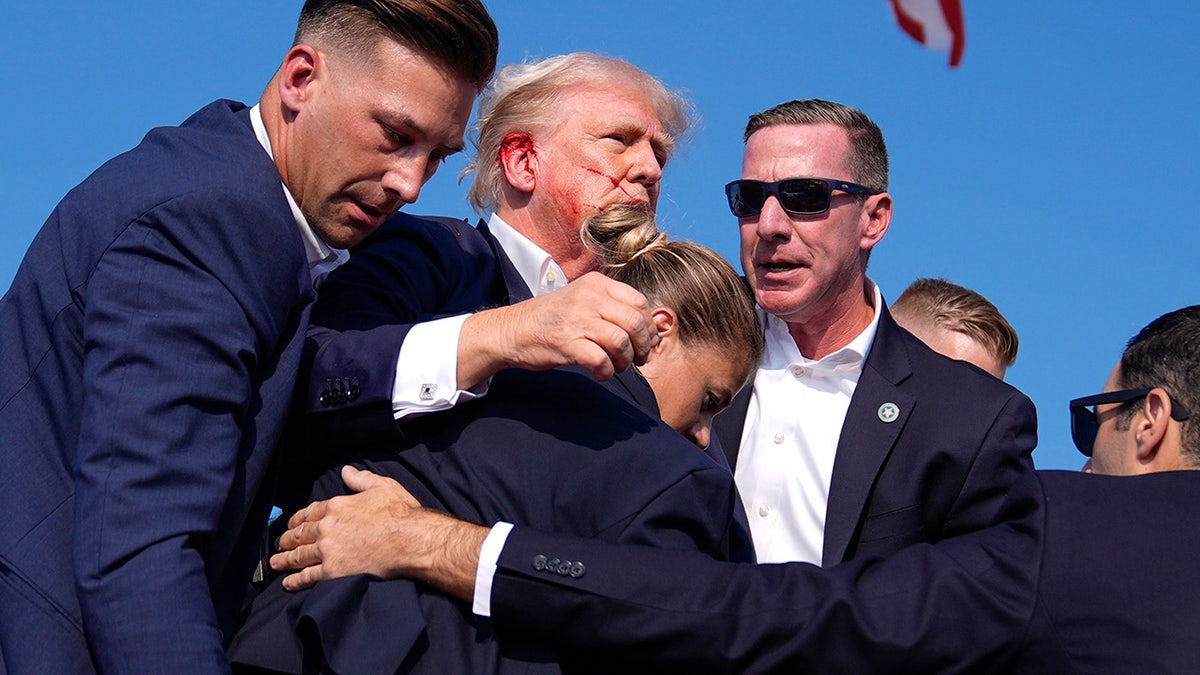
Social media algorithms amplify this tendency. Platforms reward engagement, and outrage drives clicks. Within 48 hours, Farrow’s comment was cited in right-wing forums as “proof” of liberal hypocrisy and in left-leaning circles as a disturbing possibility.
A viral TikTok video, since removed for misinformation, mashed clips of Trump praising law enforcement post-incident with Farrow’s audio, creating a false impression of coordination. The video reached over 2 million views before takedown.
The “Rally Effect” and Its Role in Public Perception
Farrow’s claim hinges on the idea that Trump benefited politically from the attack—and technically, that’s true.
Multiple polling firms, including Gallup and FiveThirtyEight, recorded a 4–6 point increase in Trump’s approval ratings in the week following the WHCD shooting. This is consistent with the “rally effect,” a well-documented phenomenon in political science where national crises temporarily boost a leader’s popularity.
Historical examples include:
- George W. Bush’s approval rising from 51% to 86% after 9/11
- Joe Biden’s ratings climbing after the Kabul airport bombing
- Boris Johnson’s surge following the 2017 Manchester Arena attack
The rally effect is psychological, not strategic. It reflects a public desire for unity and strong leadership during perceived threats—not evidence of orchestration.
As Dr. Marcus Tran of Georgetown University’s School of Government explained: “The rally effect happens regardless of whether the leader had anything to do with the crisis. It’s about perception of stability, not manipulation.”
Trump’s team, aware of this dynamic, leaned into the narrative of national resilience. His campaign released ads showing him shaking hands with first responders, using the incident to reinforce his “law and order” messaging.
But did he stage it? There’s zero evidence he did.
Celebrity Influence in Political Discourse: A Double-Edged Sword
Farrow’s comment underscores a broader issue: the outsized role celebrities play in shaping political narratives.
On one hand, public figures can spotlight underreported issues. Angelina Jolie’s advocacy brought global attention to refugee crises. Leonardo DiCaprio has elevated climate change discourse.
On the other, celebrities often lack policy expertise or investigative resources. When they speculate without evidence, the consequences can be damaging.
In Farrow’s case, her suggestion—however tongue-in-cheek—risked normalizing the idea that political violence could be weaponized by U.S. leaders. That erodes public trust in institutions and fuels extremist ideologies.
“There’s a responsibility that comes with influence,” said journalist and author Rebecca Traister. “When someone with Mia Farrow’s platform floats a theory like this without evidence, they’re not just expressing an opinion. They’re contributing to a climate where actual violence feels justified.”
The Distinction Between Satire and Incitement
One defense of Farrow is that her comment was satire.
She has a history of using irony to critique power. In 2017, she tweeted, “Putin just called. Wants to know if I’m free next Tuesday,” mocking Russian election interference. Many interpreted her WHCD comment in the same light.
But satire requires context. On a platform like Twitter, stripped of tone and nuance, satire often reads as literal.
Legal scholar Eugene Volokh notes: “The law protects free speech, but social platforms don’t distinguish intent. Once a statement spreads, it’s no longer under the speaker’s control.”
And in this case, the message was picked up by extremist corners of the internet. On 4chan and Telegram, threads emerged arguing that “even liberals admit the deep state stages attacks.” Some even called for retaliation.
Whether intended as satire or not, the impact was real.
Media Literacy in the Age of Viral Speculation
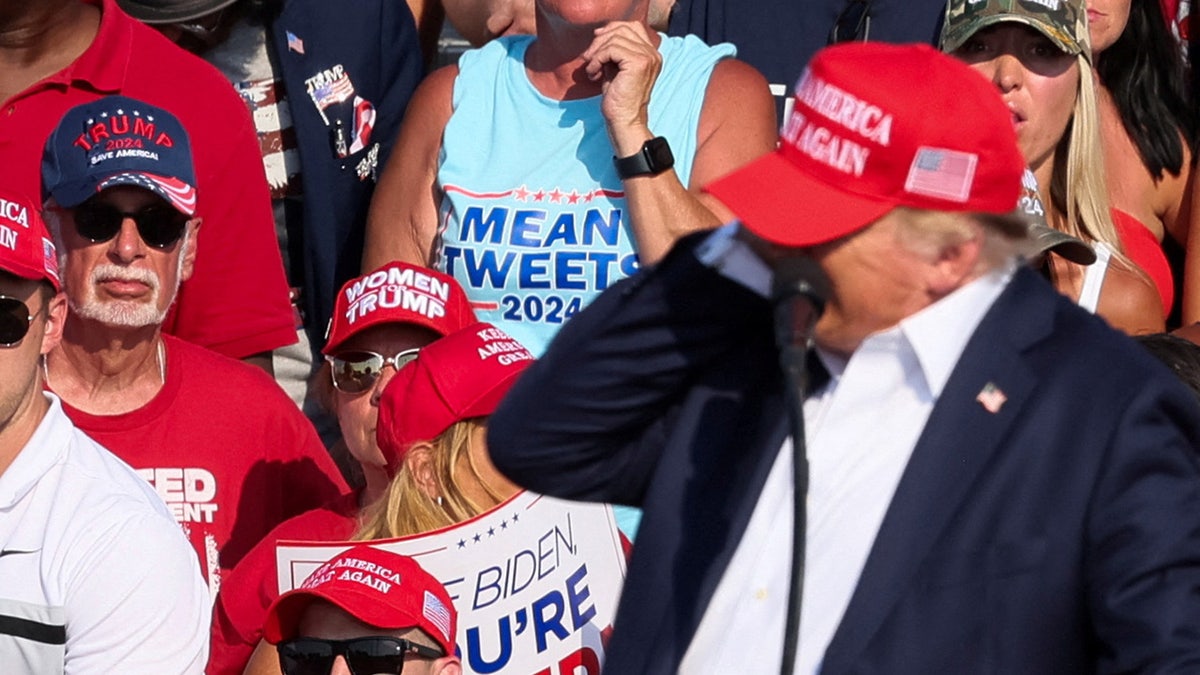
The Farrow incident is a case study in how fast misinformation spreads—and how hard it is to correct.
Fact-checkers at Reuters and AP quickly debunked the claim, noting no evidence linked Trump to the shooter. The Secret Service reiterated that security protocols prevented a tragedy, not a plot.
But corrections rarely travel as far as the original claim.
A 2023 MIT study found that false political statements spread six times faster than factual rebuttals on social media. Visual content—like the misleading TikTok—spreads even faster.
So what can readers do?
- Check the source: Was the statement made seriously? Was it deleted or clarified?
- Look for evidence: Are there documents, leaks, or credible witnesses? Or just speculation?
- Assess motive: Is the speaker known for hyperbole? Are they benefiting from attention?
- Cross-reference: Do major news outlets report the same story?
In this case, no credible outlet supported Farrow’s claim. That should have been a red flag.
The Danger of Normalizing Conspiracy in Politics
The deeper concern isn’t just one tweet—it’s what it represents.
We’re entering a phase where all political events are viewed through the lens of manipulation. Was the economy really bad? Or was it engineered to hurt the incumbent? Was the protest peaceful? Or a setup by agents provocateurs?
This cynicism benefits no one.
When every crisis is suspected as a hoax or plot, real threats get ignored. Trust in democracy erodes. And leaders feel emboldened to exploit chaos—because the public already assumes it’s staged.
Farrow may have intended to criticize Trump. But in doing so, she fed a narrative that weakens the very institutions she claims to defend.
Conclusion: Question Power—But Demand Proof
Mia Farrow’s suggestion that Trump staged the WHCD shooting to boost his approval ratings is not supported by evidence. The shooting was a real, tragic incident carried out by a disturbed individual. The subsequent rise in Trump’s ratings aligns with well-documented psychological patterns, not proof of conspiracy.
That doesn’t mean we should stop questioning power. Vigilance is essential in a democracy.
But vigilance requires rigor, not speculation. It demands evidence, not insinuation. And it must be rooted in facts—not fear.
As consumers of information, our responsibility is clear: call out corruption when proven, challenge narratives when flawed—but resist the temptation to replace one myth with another.
In an age of noise, truth is not just a goal. It’s a discipline.
FAQ
Did Mia Farrow apologize for her comment about Trump staging the WHCD shooting? Farrow did not issue a formal apology. She deleted the tweet and later posted, “Satire is lost on some,” suggesting her comment was ironic.
Is there any evidence linking Trump to the WHCD shooting? No. Federal investigations found no connection between Trump, his campaign, or any political entity and the shooter.
Why did Trump’s approval ratings go up after the shooting? This is attributed to the “rally effect,” where public support for leaders temporarily increases during crises.
Was the WHCD shooting a hoax? No. The shooting was real. A gunman opened fire, was neutralized, and a police officer was injured. The FBI confirmed the incident.
Can celebrities influence political beliefs with unfounded claims? Yes. Celebrities have large platforms, and even speculative comments can shape public perception, especially on social media.
How can I tell if a political claim is satire or serious? Look for context: tone, source history, supporting evidence, and whether the claim is reported by credible outlets.
What should I do when I see a viral political conspiracy? Pause. Verify. Check fact-checking sites like Snopes, Reuters Fact Check, or AP News before sharing.
FAQ
What should you look for in Mia Farrow Claims Trump Staged WHCD Shooting for Popularity? Focus on relevance, practical value, and how well the solution matches real user intent.
Is Mia Farrow Claims Trump Staged WHCD Shooting for Popularity suitable for beginners? That depends on the workflow, but a clear step-by-step approach usually makes it easier to start.
How do you compare options around Mia Farrow Claims Trump Staged WHCD Shooting for Popularity? Compare features, trust signals, limitations, pricing, and ease of implementation.
What mistakes should you avoid? Avoid generic choices, weak validation, and decisions based only on marketing claims.
What is the next best step? Shortlist the most relevant options, validate them quickly, and refine from real-world results.