A maintenance technician reaches into a jammed conveyor belt. The machine powers on remotely. In seconds, a life is changed. This isn’t hypothetical—it’s a reality in workplaces where lockout tagout (LOTO) procedures are ignored or poorly documented. At the heart of every effective energy control program lies the lockout tagout procedure form—a document that’s not just paperwork, but a legal and lifesaving requirement.
For facilities across manufacturing, utilities, and industrial sectors, a standardized LOTO form isn’t optional. It’s the foundation of a safety system designed to isolate hazardous energy sources and protect workers during servicing and maintenance. Yet, many organizations treat these forms as bureaucratic checkboxes, not operational tools. The result? Incomplete forms, miscommunication, and increased risk.
This guide breaks down what a lockout tagout procedure form should include, how to implement it correctly, and why precision in documentation can mean the difference between a routine repair and a catastrophic injury.
What Is a Lockout Tagout Procedure Form?
A lockout tagout procedure form is a documented set of steps that outlines how to safely de-energize, isolate, and secure machinery or equipment before maintenance or servicing. It’s not generic—it’s specific to each piece of equipment and tailored to the energy sources it uses (electrical, hydraulic, pneumatic, chemical, thermal, etc.).
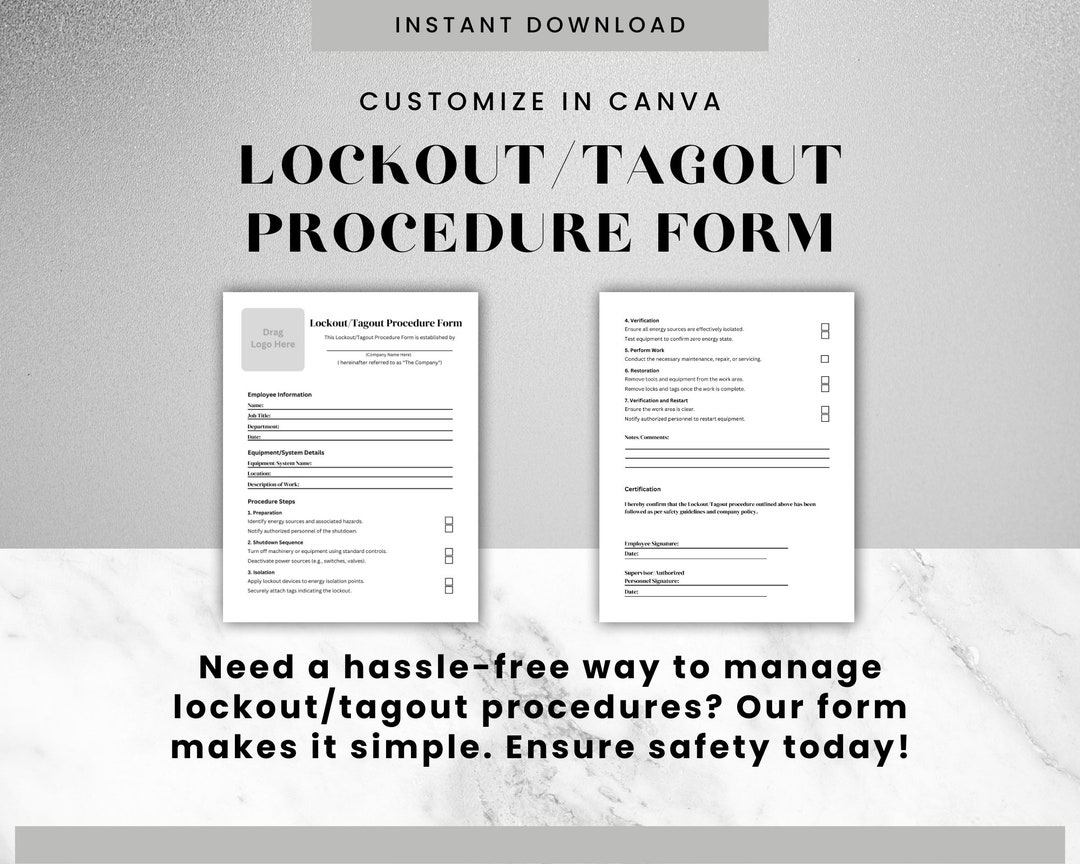
Unlike general safety policies, the LOTO form is a hands-on tool used by authorized employees during real-world operations. It includes:
- Equipment identification
- Energy source types and locations
- Sequence of shutdown and isolation
- Lock and tag application points
- Verification of zero energy
- Steps for safe re-energization
When properly executed, this form becomes a living document that guides workers through a repeatable, auditable safety process.
Why a Standardized Form Matters
Without a standardized format, LOTO procedures risk inconsistency. One technician might assume a valve is closed while another fails to verify. A form eliminates guesswork. It ensures every authorized employee follows the same critical steps—regardless of shift, experience, or urgency.
OSHA standard 29 CFR 1910.147 mandates that written procedures exist for all machines and equipment where unexpected energization could cause harm. The form is that written proof.
Key Components of an Effective LOTO Procedure Form
A high-quality lockout tagout procedure form isn’t just a checklist—it’s a detailed instruction manual. Here’s what must be included to meet compliance and ensure operational safety.
1. Equipment Identification
Start with precise identification: name, model, serial number, location, and any unique identifiers. Avoid vague labels like “conveyor system.” Instead, use “Conveyor Line 3 – Packaging Room, Model X-220.”
Example: Equipment ID: CNC Lathe #4 Location: Machining Cell B, Floor 2 Serial No.: CLT-8821-MB
This prevents confusion in facilities with duplicate or similar machines.
2. Energy Source Inventory
List every energy source connected to the equipment. This includes:
- Electrical circuits
- Hydraulic/pneumatic lines
- Steam or gas valves
- Gravity-fed components
- Capacitors or stored energy
Each source should be mapped to a specific isolation point. For instance, “Main 480V disconnect – Panel E2” or “Hydraulic shut-off valve – Line 7A.”
3. Step-by-Step Shutdown Sequence
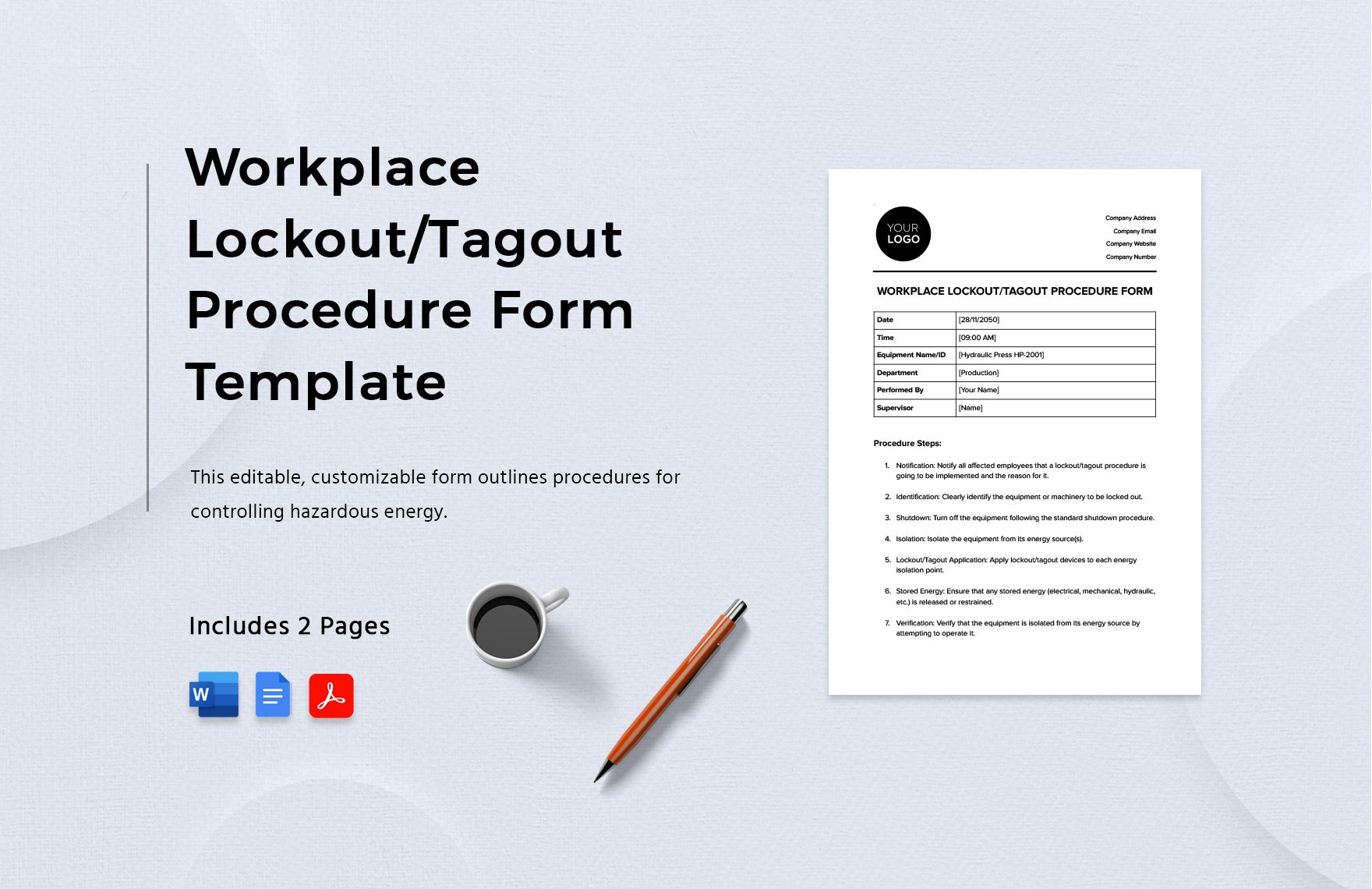
Chronological clarity is essential. The form must detail the exact order of shutdown:
- Notify affected personnel of upcoming maintenance
- Shut down the machine using the normal stop button
- Isolate the main power disconnect
- Close hydraulic valve #3 and bleed line pressure
- Engage mechanical lock on conveyor tensioner
Ambiguity kills. Phrases like “turn off power” are insufficient. Be explicit: “Open circuit breaker CB-12 at Main Distribution Panel.”
4. Lock and Tag Application Points
Identify where locks and tags are physically applied. Each point should include:
- Device type (lockout hasp, valve lock, circuit breaker lock)
- Assigned lock (individual or group)
- Tag information (name, date, reason, contact)
This section often includes a diagram or visual reference, especially for complex machinery.
5. Verification of Zero Energy
This is the most critical step—and the most commonly skipped. The form must require positive verification that all energy is neutralized.
Examples: - Test for voltage using a calibrated meter - Observe pressure gauge drop to zero - Manually attempt to cycle the machine (without re-energizing)
Without verification, the entire procedure is compromised.
6. Release and Re-energization Protocol
Re-starting equipment is just as dangerous as maintenance. The form must include steps for:
- Confirming all tools are removed
- Ensuring personnel are clear of the machine
- Removing locks only by the original installer
- Notifying affected employees before restart
A missing re-energization clause is a compliance gap.
Common Mistakes in LOTO Procedure Forms
Even organizations with forms in place often fall short. These recurring errors undermine safety and violate OSHA requirements.
1. Using Generic Templates
A single form for all machines is a red flag. A press brake has different energy sources than a boiler. Generic forms lead to missed isolation points.
Fix: Create machine-specific LOTO forms. Use a template as a starting point, but customize for each asset.
2. Omitting Stored Energy
Many forms list electrical disconnects but ignore springs, elevated loads, or capacitors. Stored energy causes 12% of LOTO-related injuries.
Fix: Conduct an energy audit for each machine. Document all potential releases, including mechanical and gravitational.
3. Skipping Verification Steps
Technicians may lock out a machine but fail to test it. They assume isolation equals safety. OSHA requires proof.
Fix: Add a mandatory verification field: “Verified zero energy? [Yes/No] Technician initials: ______”
4. Poor Accessibility
Forms buried in binders or on shared drives are useless during emergencies. If workers can’t find the procedure, they won’t follow it.
Fix: Post laminated forms near equipment or use digital tablets with offline access.
5. No Review or Update Schedule
Machines are upgraded. Processes change. A LOTO form from five years ago may not reflect current configurations.
Fix: Mandate annual reviews or updates after any equipment modification.
Digital vs. Paper LOTO Procedure Forms: What Works Best?
The shift from paper to digital LOTO forms is accelerating. Each approach has strengths and limitations.
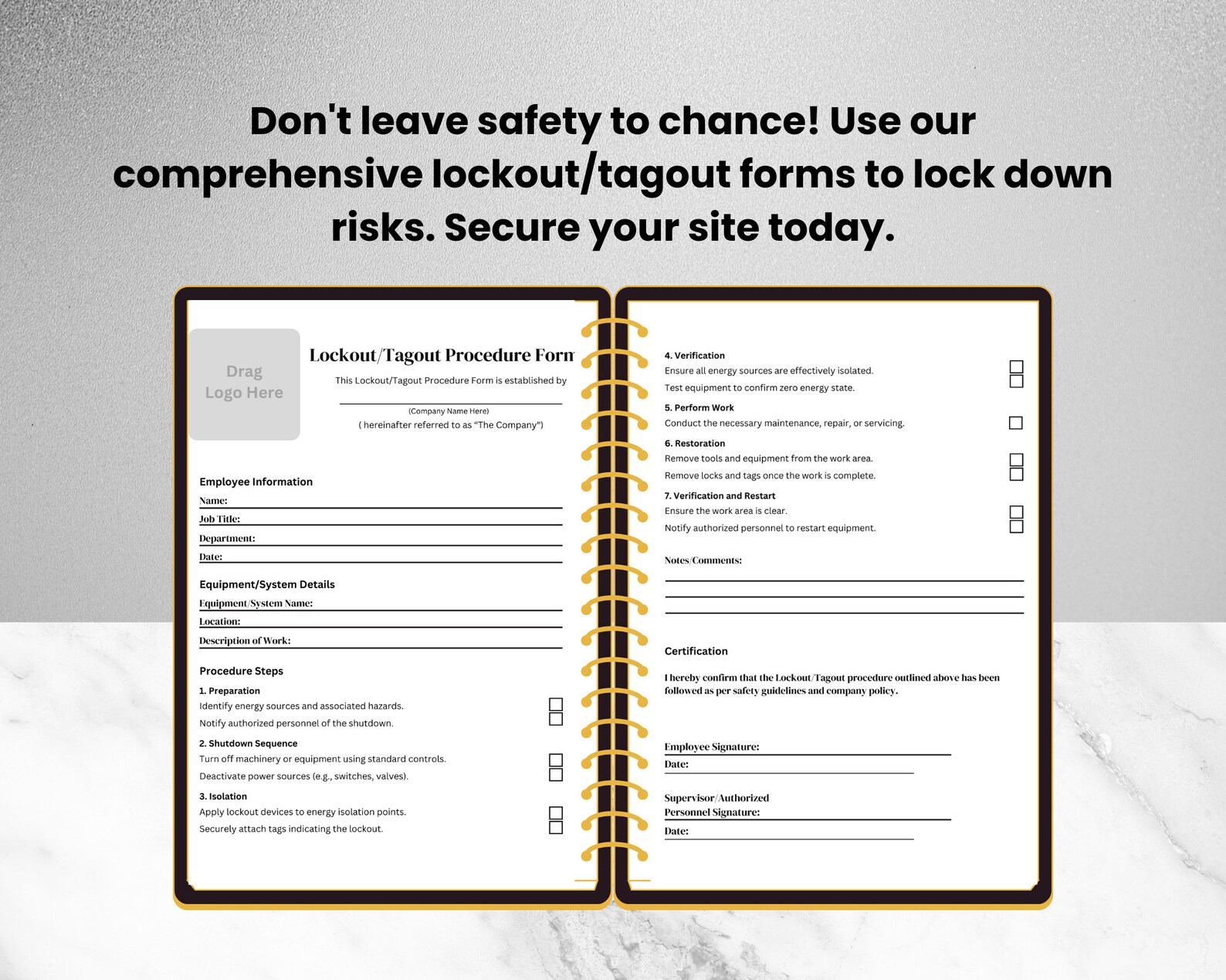
| Factor | Paper Forms | Digital Forms |
|---|---|---|
| Accessibility | Limited to physical location | Accessible via mobile devices |
| Updates | Requires reprinting | Instant cloud updates |
| Compliance Tracking | Manual sign-offs | Automated logs and timestamps |
| Searchability | Poor | Full text search across forms |
| Training Integration | Low | Can embed videos, diagrams, quizzes |
Best practice: Use digital platforms for complex or distributed operations. Reserve paper for backup or environments where electronics are restricted.
Digital systems like EHS software platforms allow real-time lockout tracking, photo documentation, and integration with work order systems—turning the LOTO form into an active safety control.
Real-World LOTO Procedure Form Example
Here’s a condensed version of what a complete form might look like for a hydraulic press:
Equipment: 150-Ton Hydraulic Press – Station 5 Location: Stamping Department, Bay D Last Reviewed: 03/2025
Energy Sources: - Electrical: 480V Main Disconnect (Panel HP-1) - Hydraulic: Pump Line Valve (HV-09) - Pneumatic: Air Supply Valve (AV-04)
- Shutdown Steps:
- Alert line supervisor and affected workers
- Press “Emergency Stop” button
- Switch off main power at HP-1
- Close HV-09 and AV-04; bleed pressure via relief valve
- Engage mechanical lock on press ram
Lock Application: - Lock 1: Main disconnect – John Rivera (Blue Lock) - Lock 2: Hydraulic valve – Sarah Kim (Green Lock)
Verification: - Voltage test: 0V confirmed with multimeter - Pressure gauge: 0 PSI - Attempted cycle: No movement
Re-energization: - Tools removed? ✅ - Area clear? ✅ - All locks removed by owners? ✅ - Supervisor approval: ___________
This level of detail prevents assumptions and creates accountability.
How to Implement LOTO Procedure Forms in Your Facility
Creating forms is only step one. Implementation determines real-world effectiveness.
1. Conduct a Machinery Audit
Inventory all equipment requiring LOTO. Classify by risk level. Prioritize high-energy or complex machines first.
2. Assign Authoring Responsibility
Designate a safety officer or team to draft forms. Involve maintenance technicians—they know the equipment best.
3. Train Authorized and Affected Employees
Authorized employees (who perform LOTO) need hands-on training. Affected employees (who operate but don’t service) must understand the process and their role.
Training should include: - How to read and use the form - Lock and tag application - Recognizing unauthorized re-energization
4. Conduct Periodic Inspections
OSHA requires annual inspections of LOTO procedures. A supervisor must observe a full lockout and review the form for accuracy.
Use the inspection to: - Identify deviations - Update outdated steps - Re-train employees if needed
5. Integrate
with Maintenance Workflows
Link LOTO forms to your CMMS (Computerized Maintenance Management System). A work order should trigger the required LOTO form, ensuring consistency.
Conclusion: Your LOTO Form Is a Lifeline
A lockout tagout procedure form is more than a compliance document—it’s a frontline defense against preventable injuries. When designed with precision, implemented with discipline, and reviewed with rigor, it becomes a non-negotiable part of your safety culture.
Don’t settle for vague, outdated, or generic forms. Audit your current procedures. Make them machine-specific, actionable, and accessible. Train your team not just to fill out the form, but to trust it.
Because in the split second between a lock applied and a machine restarted, that form isn’t paperwork. It’s protection.
Frequently Asked Questions
What should a lockout tagout procedure form include? It must list equipment details, energy sources, shutdown steps, lock/tag points, verification methods, and re-energization instructions.
Who is responsible for completing the LOTO form? Authorized employees perform the lockout and follow the form; safety managers or supervisors typically create and maintain the form.
Can one LOTO form cover multiple machines? No. Each machine requires its own form due to unique energy sources and isolation points.
How often should LOTO procedure forms be reviewed? At least annually, or whenever equipment is modified, repaired, or reconfigured.
Are digital LOTO forms OSHA-compliant? Yes, as long as they are accessible, tamper-proof, and include all required elements.
What happens if a LOTO form is missing or incomplete? Maintenance should not proceed. OSHA can issue citations, and the risk of injury increases significantly.
Can employees use their own lockout tags? Yes, but tags must include the employee’s name, date, reason for lockout, and contact information.
FAQ
What should you look for in Lockout Tagout Procedure Form: A Complete Guide to Compliance? Focus on relevance, practical value, and how well the solution matches real user intent.
Is Lockout Tagout Procedure Form: A Complete Guide to Compliance suitable for beginners? That depends on the workflow, but a clear step-by-step approach usually makes it easier to start.
How do you compare options around Lockout Tagout Procedure Form: A Complete Guide to Compliance? Compare features, trust signals, limitations, pricing, and ease of implementation.
What mistakes should you avoid? Avoid generic choices, weak validation, and decisions based only on marketing claims.
What is the next best step? Shortlist the most relevant options, validate them quickly, and refine from real-world results.