Virginia’s highest court now stands at the crossroads of democracy, law, and political power. The Virginia Supreme Court is weighing whether to block a voter-approved congressional map that tilts in favor of Democrats—a move that could reshape the state’s political future and test the limits of judicial intervention in redistricting.
This isn’t just about lines on a map. It’s about who gets represented, whose vote carries weight, and whether courts should override decisions made directly by the people. With national implications for competitive elections and long-term party control, the case has drawn sharp scrutiny from legal experts, activists, and lawmakers on both sides.
The Origins of the Current Map
The contested congressional map emerged from a unique political experiment: a citizen-led redistricting commission born out of a 2020 constitutional amendment. Virginians voted to end decades of partisan gerrymandering by transferring map-drawing authority from the legislature to a bipartisan panel of eight lawmakers and eight citizens.
The goal was clear—reduce manipulation, increase transparency, and create fairer districts. But the process quickly unraveled. The commission deadlocked along party lines, unable to agree on final maps. As required by law, the task defaulted to the Virginia Supreme Court, which in 2023 selected a map proposed by a special master—demographer David Mann.
That map, while praised for its adherence to traditional redistricting principles like compactness and community integrity, produced a 7–5 Democratic advantage in the state’s 11 U.S. House seats. Republicans argue the map is a partisan overreach disguised as neutrality.
Why Republicans Want the Map Blocked
Republican lawmakers and conservative groups have filed challenges arguing that the court-drawn map violates the Virginia Constitution’s requirement for “geographic compactness” and “minimal division of cities and counties.” They claim the map splits too many localities and creates irregular shapes to benefit Democratic voters.
More pointedly, they argue the court overstepped when it accepted a map from a special master with known Democratic ties. David Mann previously worked on redistricting projects in blue-leaning states and consulted for the National Democratic Redistricting Committee. To Republicans, this raises concerns about impartiality—even if Mann’s methodology was technically sound.
One telling example: the 5th District, stretching from Charlottesville to Lynchburg, snakes through multiple counties in a way critics say dilutes rural Republican strength. The 7th District, centered on Richmond, packs Democratic-leaning voters but also pulls in distant precincts to achieve desired partisan outcomes.
“This isn’t reform—it’s one-party rule by judicial appointment,” said Del. Rob Bell, a Republican challenger to the map.
The legal argument hinges on whether the court fulfilled its duty as a neutral arbiter or acted as a proxy for Democratic interests under the guise of expertise.
Democratic and Voter Advocacy Defense of the Map
Supporters of the current map, including Democratic leaders and nonpartisan good government groups, counter that the map complies with all constitutional requirements and was the only viable option after legislative failure.
They emphasize that the special master’s proposal was vetted through public hearings, met compactness standards better than most alternatives, and preserved more intact communities than prior Republican-drawn maps. They also note that the map reflects Virginia’s evolving demographics—particularly suburban shifts toward Democrats in Northern Virginia and Hampton Roads.
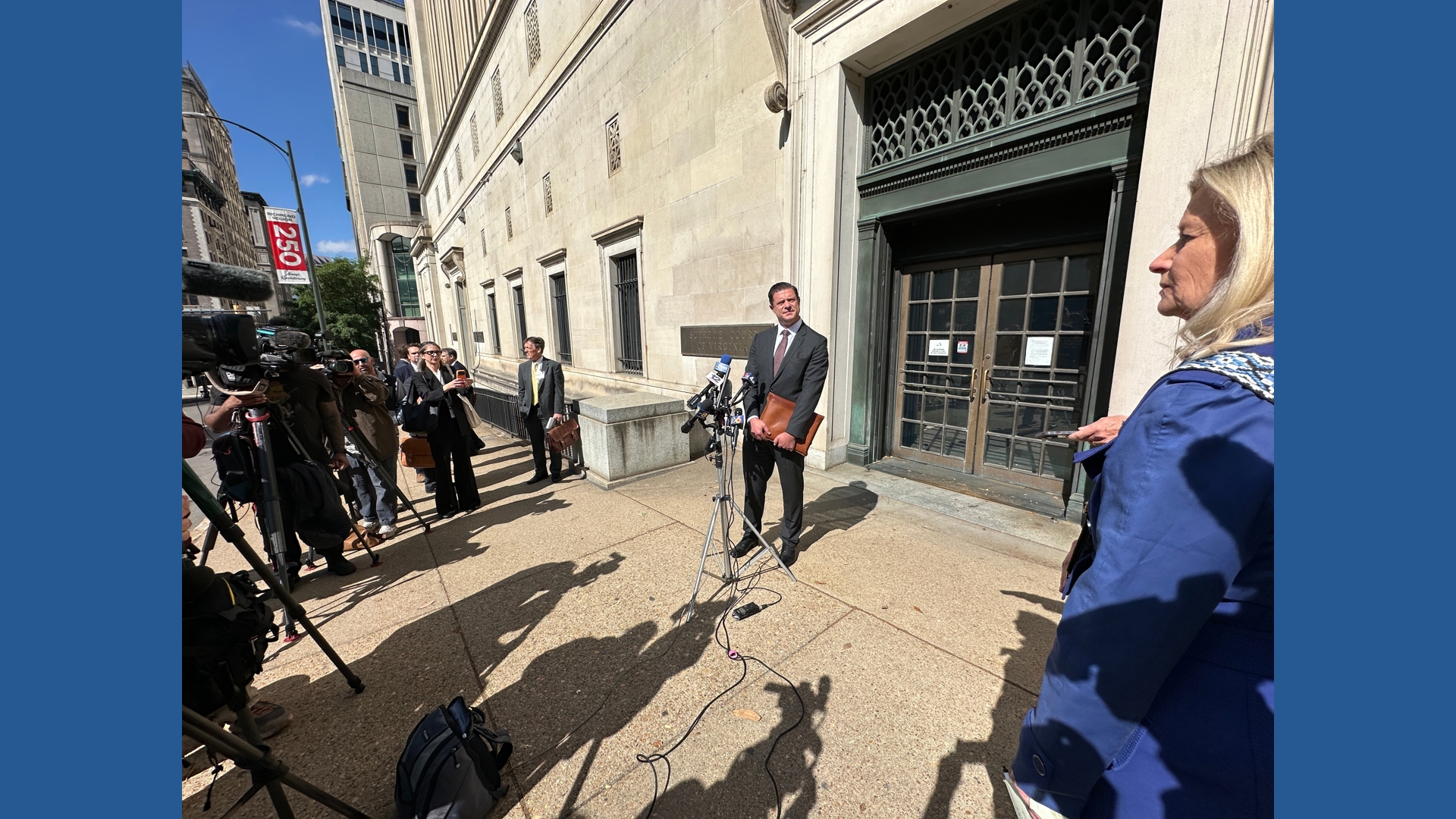
Moreover, they stress that the court followed the law. When the commission failed, the constitution explicitly empowered the judiciary to resolve the impasse. The justices didn’t draw the map themselves but chose from submissions based on neutral criteria.
“The court didn’t invent this map—it selected the one that best followed the rules,” said Jaewon Yang, redistricting director at the League of Women Voters of Virginia.
The voter-approved amendment, they argue, was designed to prevent exactly the kind of gridlock and manipulation that occurred. Overturning the map now would undermine both the amendment’s intent and public trust in judicial institutions.
Legal Precedent and Constitutional Tension
At the heart of the case is a constitutional contradiction: how to balance procedural fairness with political outcomes. The Virginia Constitution bans “partisan gerrymandering,” but doesn’t define it clearly. This ambiguity gives the court wide discretion—and invites accusations of bias no matter the ruling.
Past rulings offer limited guidance. In 2021, the court struck down a Republican-drawn map for splitting too many jurisdictions—a precedent now cited by Democrats to defend the current map’s structural choices. But critics argue the court applied inconsistent standards.
One key distinction: the 2021 map was drawn by politicians with clear partisan motives. Today’s map originated from an independent expert. Still, the outcome—a Democratic advantage—fuels skepticism.
Legal scholars are divided. Some, like University of Virginia professor A.E. Dick Howard, argue the court must remain outcome-agnostic: “If the process was lawful, the result stands—even if one party benefits.” Others warn that repeated perceptions of judicial favoritism could erode the court’s legitimacy.
What’s at Stake Beyond 2024 Elections
The immediate impact would be felt in the 2024 and 2026 U.S. House races. Under the current map, Democrats are favored to hold seven seats, making Republican gains nearly impossible without a national landslide. Flip one district, and control of the U.S. House could hang in the balance.
But the broader implications run deeper:
- Precedent for Citizen Reform: If the court overturns a map born from a voter-approved reform, it signals that grassroots efforts to depoliticize redistricting can still be undone by litigation.
- Judicial Role in Politics: The decision will define how much power state courts should wield in drawing political boundaries—especially when legislatures fail.
- National Ripple Effects: Virginia’s case could influence similar battles in states like Ohio, North Carolina, and Michigan, where courts have stepped in during redistricting disputes.
Already, advocacy groups are preparing for escalation. If the Virginia Supreme Court blocks the map, Democrats may push for emergency intervention from federal courts—reigniting debates over the role of federalism in election administration.
Real-World Impact on Voters and Communities
Maps shape representation—but not always equitably. Consider Prince William County, split across three districts under the current plan. Residents in Woodbridge vote in the 11th District, while those in Manassas Park are drawn into the 10th. Despite shared infrastructure, schools, and economic concerns, they’re represented by different lawmakers with divergent priorities.
Similarly, the Tidewater region sees Norfolk and Virginia Beach divided between the 2nd and 3rd Districts. While the split preserves some municipal boundaries, it separates coastal communities with common interests in naval employment, sea-level rise, and port logistics.

These divisions aren’t inherently illegitimate—but they highlight how even “neutral” maps create winners and losers. The challenge is ensuring splits serve geographic logic, not political convenience.
One practical test: do residents feel connected to their representative? In districts cobbled together from distant suburbs and rural enclaves, engagement often drops. Campaigns focus on swing areas, neglecting outlying regions. That erodes accountability.
Potential Outcomes and Their Consequences
The Virginia Supreme Court has several paths forward—each with significant fallout:
- Uphold the Current Map
- - Effect: Stability for 2024 elections, validation of citizen-led reform process.
- - Risk: Accusations of judicial partisanship; potential federal scrutiny.
- Block the Map, Order a New Process
- - Effect: Redistricting chaos months before elections; possible legislative revival of commission.
- - Risk: Voter confusion, delayed primaries, legal battles in federal court.
- Remand to a Special Master for Adjustments
- - Effect: Targeted fixes to contested districts (e.g., 5th and 7th).
- - Risk: Perceived tinkering to preserve Democratic advantage.
- Reinstate a Previous Map (e.g., 2017 Republican Version)
- - Effect: Immediate Republican gain in seat projections.
- - Risk: Constitutional inconsistency and public backlash over reversing voter-backed reform.
Most legal observers expect the court to uphold the map, citing procedural compliance. But a narrow ruling—perhaps requiring minor adjustments—could be a compromise to preserve legitimacy.
A Defining Moment for Virginia’s Democracy
The Virginia Supreme Court’s decision won’t just redraw lines on a map. It will define the balance of power between voters, lawmakers, and judges in shaping representation.
This moment demands restraint, clarity, and fidelity to the constitution—not political calculation. The court must ask: does overturning a lawful, voter-backed process serve justice, or merely shift advantage?
Virginians deserve districts that reflect their communities, not courtroom strategies. Whether the current map achieves that is debatable. But discarding it without overwhelming cause risks doing more harm than good.
The path forward lies not in reverting to old partisan games, but in strengthening the institutions designed to prevent them. The court’s ruling should protect the process—even when the outcome displeases one side.
Actionable takeaway: Follow the Virginia Supreme Court’s official docket for real-time updates. Engage with local Leagues of Women Voters or Common Cause chapters to advocate for transparent redistricting standards. And in 2025, push for legislative fixes to clarify “compactness” and prevent future deadlocks.
FAQ
Why is the Virginia Supreme Court involved in drawing maps? Because the bipartisan redistricting commission failed to agree, the state constitution transferred authority to the court to resolve the deadlock.
Does the current map favor Democrats? Yes—analysts project it would result in 7 Democratic and 5 Republican U.S. House seats, reflecting Virginia’s current political leanings.
Can courts block voter-approved redistricting measures? They can if the outcome violates constitutional standards, but doing so risks undermining public confidence in direct democracy.
What happens if the map is blocked? The court could order a new map, revive the commission, or use an alternate plan—potentially delaying elections.
How does this affect national politics? Virginia’s 11 House seats could influence party control in Congress, especially in closely divided elections.
Were public comments considered in the current map? Yes—special master David Mann held multiple public hearings and incorporated feedback before finalizing the proposal.
Is gerrymandering illegal in Virginia? The state constitution bans partisan gerrymandering, but enforcement relies on vague standards like compactness and community integrity.
FAQ
What should you look for in Virginia Supreme Court Weighs Fate of Democratic-Favored House Map? Focus on relevance, practical value, and how well the solution matches real user intent.
Is Virginia Supreme Court Weighs Fate of Democratic-Favored House Map suitable for beginners? That depends on the workflow, but a clear step-by-step approach usually makes it easier to start.
How do you compare options around Virginia Supreme Court Weighs Fate of Democratic-Favored House Map? Compare features, trust signals, limitations, pricing, and ease of implementation.
What mistakes should you avoid? Avoid generic choices, weak validation, and decisions based only on marketing claims.
What is the next best step? Shortlist the most relevant options, validate them quickly, and refine from real-world results.