Elon Musk is suing Sam Altman and OpenAI, claiming the company abandoned its founding mission in favor of profit. What began as a shared vision for open, nonprofit AI has fractured into a high-stakes legal war between two of tech’s most influential figures. This isn’t just a dispute over control—it’s a clash of philosophies about who owns the future of artificial intelligence.
At the heart of the case is a simple accusation: OpenAI betrayed its original charter. Musk alleges that the organization shifted from a transparent, open-source model to a closed, for-profit structure dominated by Microsoft. The courtroom showdown could reshape how AI is developed, who benefits, and whether public interest can survive in an era of trillion-dollar tech ambitions.
The Origins of OpenAI: A Promise Broken?
OpenAI launched in 2015 with a bold mission: to ensure artificial general intelligence (AGI) benefits all of humanity. Founders, including Musk and Altman, pledged to prioritize safety, openness, and long-term societal well-being over short-term profits. Early commitments included open-sourcing research and resisting acquisition by tech giants.
Musk contributed over $100 million and was deeply involved in strategy. But by 2018, he stepped down from the board, citing potential conflicts with Tesla’s AI work. Behind the scenes, tensions were growing. Musk reportedly pushed for a fully open model, while Altman and others argued a hybrid approach—combining nonprofit oversight with for-profit investment—would be necessary to compete with Google, Meta, and Amazon.
The pivot came in 2019 with the creation of OpenAI LP, a “capped-profit” entity. This allowed the company to raise billions from investors, including Microsoft, which has since invested over $13 billion. Musk claims this move shattered the original agreement. Emails cited in the lawsuit suggest he warned Altman that OpenAI was becoming “closed source” and “effectively a Microsoft subsidiary.”
The Core of the Lawsuit: Mission, Control, and Access
Musk’s legal complaint centers on three key claims:
- Breach of Fiduciary Duty: Musk argues that OpenAI’s leadership, particularly Altman, abandoned their duty to act in the public interest and instead prioritized commercial gain.
- Violation of Founding Principles: The shift to a for-profit model contradicts the nonprofit’s stated mission and original governance structure.
- Misappropriation of Intellectual Property: Musk claims he co-developed early AI models and should retain rights or influence over their use.
The lawsuit demands that OpenAI revert to its open-source roots and place control back into a nonprofit framework. It also seeks transparency into key decisions, including the integration of OpenAI technology into Microsoft’s products.
Legal experts note the challenge: while Musk’s moral argument is strong, proving a legally binding agreement on mission terms is difficult. The original incorporation documents were broad, and Musk’s departure in 2018 may weaken his standing. Still, the case could force OpenAI to formally defend its evolution—something it has avoided in public.

Why This Fight Matters Beyond OpenAI
This isn’t just a celebrity feud. The outcome could set precedents for how AI is governed, funded, and made accessible.
Consider the implications:
- Open vs Closed AI: If OpenAI remains a Microsoft-adjacent, proprietary entity, it may accelerate a trend where cutting-edge AI is controlled by a few corporations. That limits independent research, increases pricing barriers, and centralizes power.
- Public Trust: OpenAI’s early appeal was built on transparency. As products like ChatGPT went mainstream, users assumed they were backed by ethical oversight. Musk’s lawsuit threatens that image, raising doubts about who’s really in charge.
- Regulatory Ripple Effects: Governments watching AI development may use this case to justify stronger oversight. If even founders can’t rein in a company’s mission drift, should regulators step in?
A precedent could emerge: mission-driven organizations must legally lock in their values, or risk being reshaped by capital and leadership changes.
Musk’s Strategy: Idealism or Power Play?
Critics argue Musk’s motives aren’t purely altruistic. He now leads xAI, a rival AI startup building Grok, an AI assistant integrated into X (formerly Twitter). Grok positions itself as “anti-woke” and less filtered than ChatGPT—appealing to a different ideological base.
Is Musk suing to protect a principle, or to weaken a competitor?
Timing raises questions. The lawsuit emerged shortly after Altman’s brief ousting and reinstatement at OpenAI in late 2023—an internal crisis that exposed governance flaws. Musk may be capitalizing on instability.
Yet his actions align with a long-standing stance. He co-signed the 2023 open letter calling for a pause in giant AI experiments, warning of “profound risks to society.” His criticism of AI censorship—especially in political content—echoes concerns among free speech advocates.
Whether idealist or strategist, Musk has forced a conversation many in tech hoped to avoid: can a company stay true to its mission when billions are on the line?
Altman’s Defense: Evolution, Not Betrayal
Sam Altman hasn’t stayed silent. He argues that OpenAI’s shift wasn’t a betrayal, but a necessary adaptation. Building AGI requires massive resources—computing power, talent, infrastructure. No nonprofit, no matter how well-funded, could match Google DeepMind or Meta AI alone.
In interviews, Altman has framed the capped-profit model as a compromise: investors get returns, but a nonprofit board retains ultimate control and can block decisions that contradict the mission.
“We started with the belief that we could do this as a fully open nonprofit,” Altman said in a 2023 podcast. “But the scale of what we needed to build changed everything.”
He also points to OpenAI’s safety frameworks, alignment research, and gradual product rollouts as proof of ethical commitment. Unlike some competitors, OpenAI didn’t rush models to market. Moderation systems, while imperfect, were built early.
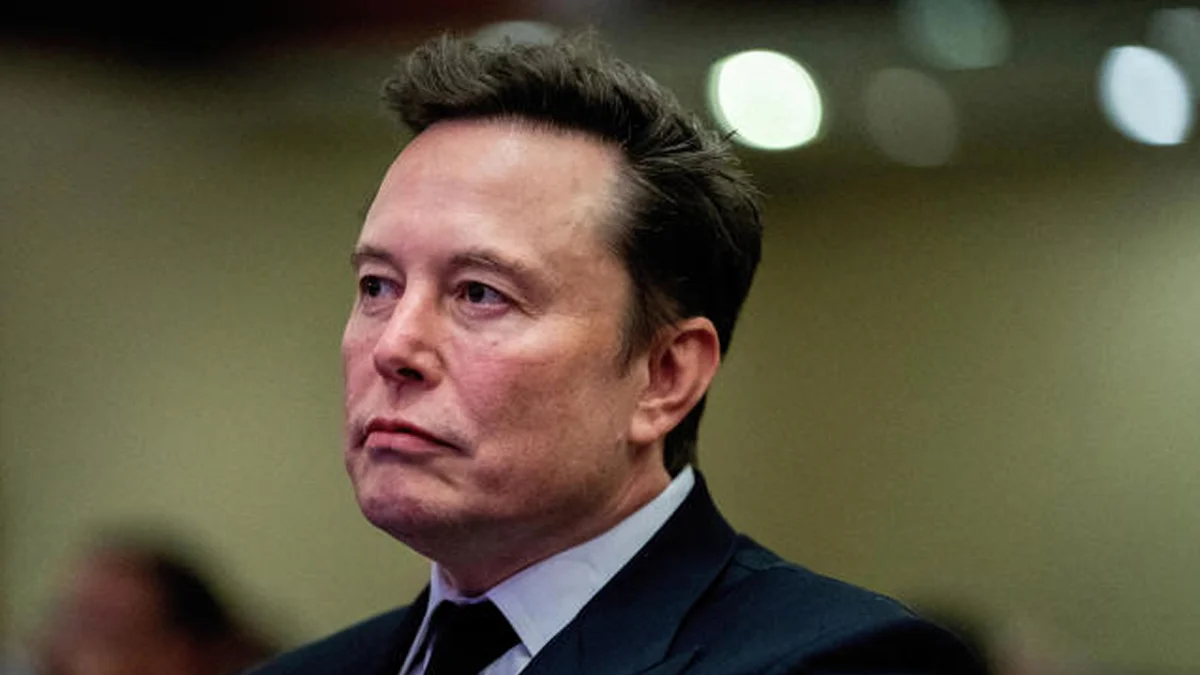
Still, the Microsoft partnership complicates the narrative. Azure hosts OpenAI’s infrastructure. Copilot, Microsoft’s AI assistant, runs on OpenAI models. The integration is deep—and profitable.
Can a company be independent when its biggest backer is also its biggest customer?
Legal and Ethical Implications for the AI Industry
The Musk vs. Altman clash highlights systemic tensions in AI development:
- Governance Gaps: Many AI startups lack clear, enforceable mission clauses. OpenAI’s case could prompt new legal structures—like benefit corporations or public-interest LLCs—that codify ethical constraints.
- Founder Control: As companies grow, early visionaries often lose influence. This case may encourage founders to retain board seats or veto rights over mission-critical decisions.
- Transparency Demands: Users increasingly care about how AI is trained and governed. A ruling in Musk’s favor could force companies to publish ethics audits or open-source core components.
Already, we’re seeing ripple effects. Anthropic, another AI firm, built a “long-term benefit” trust to ensure its mission survives leadership changes. The EU’s AI Act includes provisions for transparency and accountability—standards OpenAI may struggle to meet if deemed a de facto Microsoft subsidiary.
The Road Ahead: What’s at Stake?
If Musk wins, OpenAI could be forced to restructure: spinning off commercial operations, releasing more code, or returning to a fully nonprofit model. Microsoft’s influence might be legally curtailed.
More likely, the case settles. Musk may gain concessions—like board representation or access to research—without a full reversal.
But even a loss could be a win. The trial shines a spotlight on OpenAI’s evolution. Public scrutiny may pressure the company to recommit to openness, release impact reports, or expand public input on AI policy.
For the broader AI ecosystem, this fight is a wake-up call: mission drift isn’t just a PR risk—it can become a legal liability.
A Clear Verdict on Values—Not Just Victory
There’s no clean moral high ground here. Musk, despite his warnings about AI danger, runs a company using AI to moderate speech on a global platform. Altman, while advocating caution, races to commercialize models faster than many researchers advise.
The real winner should be accountability.
Whether OpenAI remains independent, becomes a public utility, or splits into competing entities, the takeaway is clear: AI too powerful to be left to silent boardrooms or unchecked ambition.
The courtroom battle between Musk and Altman isn’t just about control—it’s about defining what “benefiting humanity” actually means in practice.
Closing: Demand Transparency, Test Claims, Think Long-Term
Don’t take corporate mission statements at face value. Whether you're an investor, developer, or user, ask: - Who controls the model weights? - Can the nonprofit board actually override commercial decisions? - How much influence does Microsoft—or any single investor—really have?
Use tools like the AI Incident Database or AlgorithmWatch to track real-world impacts. Support organizations pushing for open benchmarks and ethical audits.
The future of AI won’t be decided in a courtroom alone. It will be shaped by the choices we make—what we build, what we question, and what we demand.
Frequently Asked Questions
What is Elon Musk suing OpenAI for? Musk claims OpenAI abandoned its nonprofit, open-source mission and became a for-profit subsidiary of Microsoft, violating its founding principles and his agreements with Sam Altman.
Did Elon Musk co-found OpenAI? Yes, Musk was a co-founder and early funder of OpenAI in 2015 but left the board in 2018 due to conflicts with his work at Tesla.
Is OpenAI still a nonprofit? It’s a hybrid. The original nonprofit governs a for-profit subsidiary (OpenAI LP), but critics argue the nonprofit no longer has meaningful control.
How is Microsoft involved with OpenAI? Microsoft is the primary investor, with over $13 billion committed. OpenAI’s models power Microsoft’s AI products like Copilot, and Azure hosts its computing infrastructure.
Can Sam Altman be removed from OpenAI? He can, by the board. In 2023, he was briefly fired, sparking a backlash. He was reinstated after investor pressure, highlighting the tension between governance and power.
What does this lawsuit mean for ChatGPT users? Short-term, little changes. Long-term, it could lead to more transparency, open-sourcing, or even fragmentation of OpenAI’s technology.
Could OpenAI become open source again? Possible, but unlikely in full. The lawsuit might force partial releases or stricter governance, but the cost of running large models makes complete openness impractical.
FAQ
What should you look for in Musk vs Altman: The Legal Battle for OpenAI's Future? Focus on relevance, practical value, and how well the solution matches real user intent.
Is Musk vs Altman: The Legal Battle for OpenAI's Future suitable for beginners? That depends on the workflow, but a clear step-by-step approach usually makes it easier to start.
How do you compare options around Musk vs Altman: The Legal Battle for OpenAI's Future? Compare features, trust signals, limitations, pricing, and ease of implementation.
What mistakes should you avoid? Avoid generic choices, weak validation, and decisions based only on marketing claims.
What is the next best step? Shortlist the most relevant options, validate them quickly, and refine from real-world results.